
Mostly, no. Social media rarely produces Airbnb bookings directly, and hosts who treat Instagram as a booking channel usually burn 5–10 hours a week for nothing measurable. What social media does well is different and narrower: it warms up guests who already found you, and it feeds a direct booking funnel if you have one. Here is where the line sits, with a time budget that actually pays.
Summary
- Social media is a trust layer, not a demand engine. Guests check your Instagram to validate a booking they were already considering.
- The channels that actually produce bookings: Airbnb/VRBO search ranking, Google (search and Maps), a direct booking website, and your past-guest list.
- Social content only compounds when it points somewhere you own. Without a direct booking site, likes die on the platform.
- A workable time split for a solo host: 80% listing optimization, pricing, and direct channel; 20% social, batched monthly.
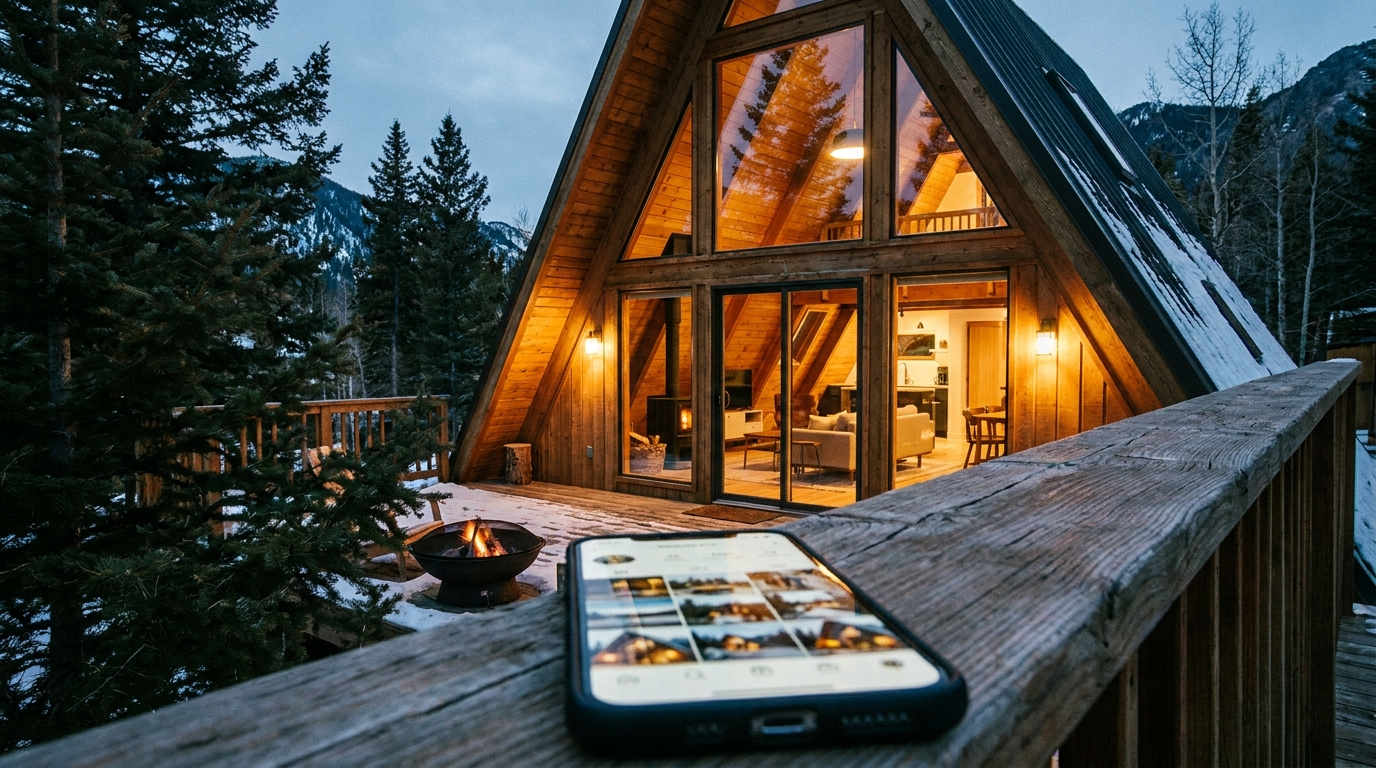
Table of Contents
- Why doesn’t social media convert into bookings?
- What social media is actually good at for STRs
- What actually drives direct bookings?
- When social media DOES work: the exceptions
- A realistic social strategy for hosts (batched, 4 hours/month)
- Common mistakes
- FAQ
Why Doesn’t Social Media Convert Into Bookings?
Social media fails as a booking channel because of intent mismatch. People scrolling Instagram or TikTok are not planning a trip to your specific town on your specific open dates. Booking demand is captured where people search with dates in hand: Airbnb, VRBO, Booking.com, and Google. Social reaches people at the wrong moment.
Run the math on the funnel. Say a reel gets 10,000 views. Perhaps 2% are within driving or flying distance of your market. Of those, a fraction are planning any trip in the next year, and a fraction of those have dates matching your availability. You are converting from a pool of maybe a dozen genuine prospects per viral post, and you cannot control when the algorithm delivers them.
Compare that to Airbnb search in your market, where every single viewer has dates, a budget, and intent. Ranking three spots higher there is worth more than 100,000 impressions on a platform full of people who will never visit your city. If you want the levers that move platform ranking, we broke them down in our guide to Airbnb SEO in 2026.
What Social Media Is Actually Good At for STRs
Social media works as validation, not acquisition. It does four jobs well:
- Pre-booking trust checks. Guests who found you on Airbnb or Google will look you up. An active, well-shot profile confirms the property is real, cared for, and current. A dead profile from 2024 quietly raises doubt.
- Rebooking gravity. Past guests who follow you see your shoulder-season availability, renovations, and offers. These are the cheapest bookings you will ever get.
- Local partnerships. Tour operators, wedding planners, and relocation agents find and vet you through social presence. One planner relationship can outbook a year of reels.
- Content for channels that DO convert. The photo and video assets you create for social are the same assets that upgrade your listing and your website. Shoot once, deploy everywhere. Our piece on short-term rental photography covers why the listing deployment matters most.
What Actually Drives Direct Bookings?
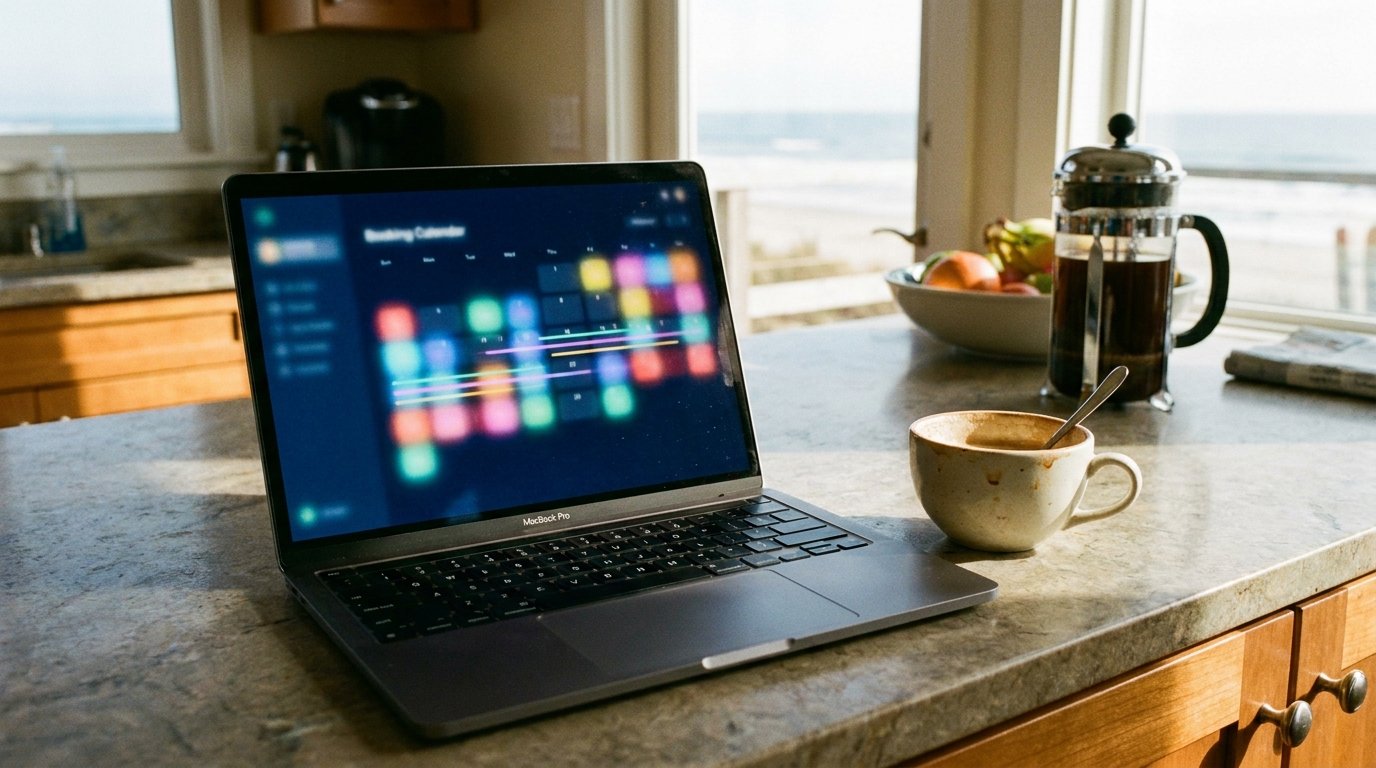
Direct bookings come from four sources: Google search and Maps visibility for “[your market] + cabin/condo/chalet” queries, a fast direct booking website with live calendar and instant payment, your past-guest email and SMS list, and repeat corporate or relocation clients. Social media supports these; it does not replace them.
The direct booking website is the hub
Every marketing dollar and hour you spend ultimately either builds an asset you own or rents attention on a platform you don’t. A direct booking site is the difference between social media being a dead end and being a funnel entrance. When a reel does land with someone planning a trip, “link in bio → check dates → book” only works if the link goes to a site that can take the booking. Otherwise you are sending warm demand back to Airbnb to pay 14–16% in fees on a guest you generated.
On a property doing $60,000/year in bookings, moving even a quarter of reservations direct saves roughly $2,100–$2,400 in platform fees annually, and it builds a guest list Airbnb will never hand you. That typically pays for the website in year one. We build these for hosts; see our direct booking website service for what a proper one includes.
Google is the search engine guests actually use with intent
Travelers increasingly skip the platforms and search “pet friendly cabin Canmore hot tub” straight into Google, and AI assistants answer those queries by citing property websites. Ranking there requires a real site with location pages and content. Our vacation rental SEO guide walks through the full playbook.
When Social Media DOES Work: The Exceptions
There are three situations where social genuinely produces bookings:
- Destination-worthy properties. If the property itself is the trip (a striking A-frame, a dome, a design-forward cabin), content can create demand rather than intercept it. These properties go viral because the property is the content. A standard two-bedroom condo cannot replicate this no matter how good the reels are.
- Tight niche + owned funnel. Hosts who serve a specific audience (sled trips, wedding parties, remote-work months) and capture emails from social into an owned list can convert over time.
- Local brand plays with multiple units. A 5–15 unit operator building a recognizable local hospitality brand gets compounding value: social presence feeds partnerships, press, and corporate accounts, not just individual guests.
Notice all three still route through an owned asset. The exception is never “post more,” it is “have somewhere for the attention to land.”
A Realistic Social Strategy for Hosts: 4 Hours a Month
A solo host can run an effective social presence in about four batched hours a month:
- Hour 1: capture. On one turnover visit, shoot 20–30 vertical clips and photos: golden-hour exterior, hot tub steam, the view, seasonal details. One session feeds a month.
- Hour 2: batch and schedule. Cut 6–8 posts, schedule them weekly. Every caption ends with the same call: “Book direct and save, link in bio.”
- Hour 3: respond and log. Reply to comments and DMs once a week on a timer. DM inquiries get the direct booking link, never “check Airbnb.”
- Hour 4: partnerships. Message two local businesses a month: photographers, tour operators, wedding planners. This hour outperforms the other three combined.
Everything beyond this allocation should go to pricing, listing optimization, guest experience, and your direct channel. Those move revenue every week. Social moves it occasionally.
Common Mistakes
- Measuring likes instead of booked nights. If you cannot trace a booking to a channel, you cannot budget time for it. Ask every direct guest how they found you.
- Posting daily with no destination link. Attention with nowhere to land is a donation to the platform.
- Buying followers or engagement pods. Guests can smell it, and 40,000 fake followers convert worse than 400 real locals.
- Ignoring the past-guest list while chasing strangers. Your highest-converting audience already stayed with you and gave you their email.
- Letting the profile die. If you will not maintain it, a clean minimal profile beats an abandoned one. Stale content reads as a stale property.
FAQ
Should I run paid social ads for my Airbnb?
Only with a direct booking site to land on, and only for retargeting or a specific gap (shoulder season, a new unit). Cold social ads for a single STR rarely return their spend. Google Ads on high-intent local queries typically outperforms them dollar for dollar.
Which platform matters most for short-term rentals?
Instagram, because it doubles as your trust check when guests look you up. TikTok reach is bigger but colder, and Facebook still matters for local groups and past-guest communities. Pick one primary platform and cross-post; running three seriously is a full-time job.
Does social media help my Airbnb listing rank higher?
Not directly. Airbnb’s ranking rewards conversion, response rate, pricing, and reviews, not external follower counts. Indirectly, external traffic that books through your listing can help its conversion metrics, but that is a thin effect compared to optimizing the listing itself.
Is hosting content becoming a full-time job?
Only if you let it. The hosts who feel that way are usually doing daily posting with no system. Batch capture, batch scheduling, and a hard monthly time cap keep social in its place: a supporting channel, not a second career.
Conclusion
Social media is real work with occasional payoff, and hosts keep mistaking it for the engine because it is the most visible kind of marketing. The engine is search ranking, pricing, guest experience, and a direct channel you own. Put your hours there first, run social on a four-hour monthly batch, and make sure every piece of content points at a booking page that belongs to you.
If you’re sending social traffic back to Airbnb because you have nowhere else to send it, that’s the first thing to fix. We build fast, conversion-focused direct booking websites for Canadian hosts. Start with our intake form and we’ll scope it for your property.