
By Cody Wise, Founder, Wise Media. Last updated 8 September 2026. This article is general information about Canadian trademark practice, not legal advice. Confirm your own position with a registered trademark agent or lawyer.
Yes. You can register an AI-generated logo as a trademark in Canada. The Trademarks Act has no authorship requirement at all, so nothing in it cares whether a person, a design agency or a diffusion model drew the mark. The real obstacles are different and nobody warns you about them: distinctiveness, and whether you actually own the artwork well enough to stop anyone else using it.
Summary
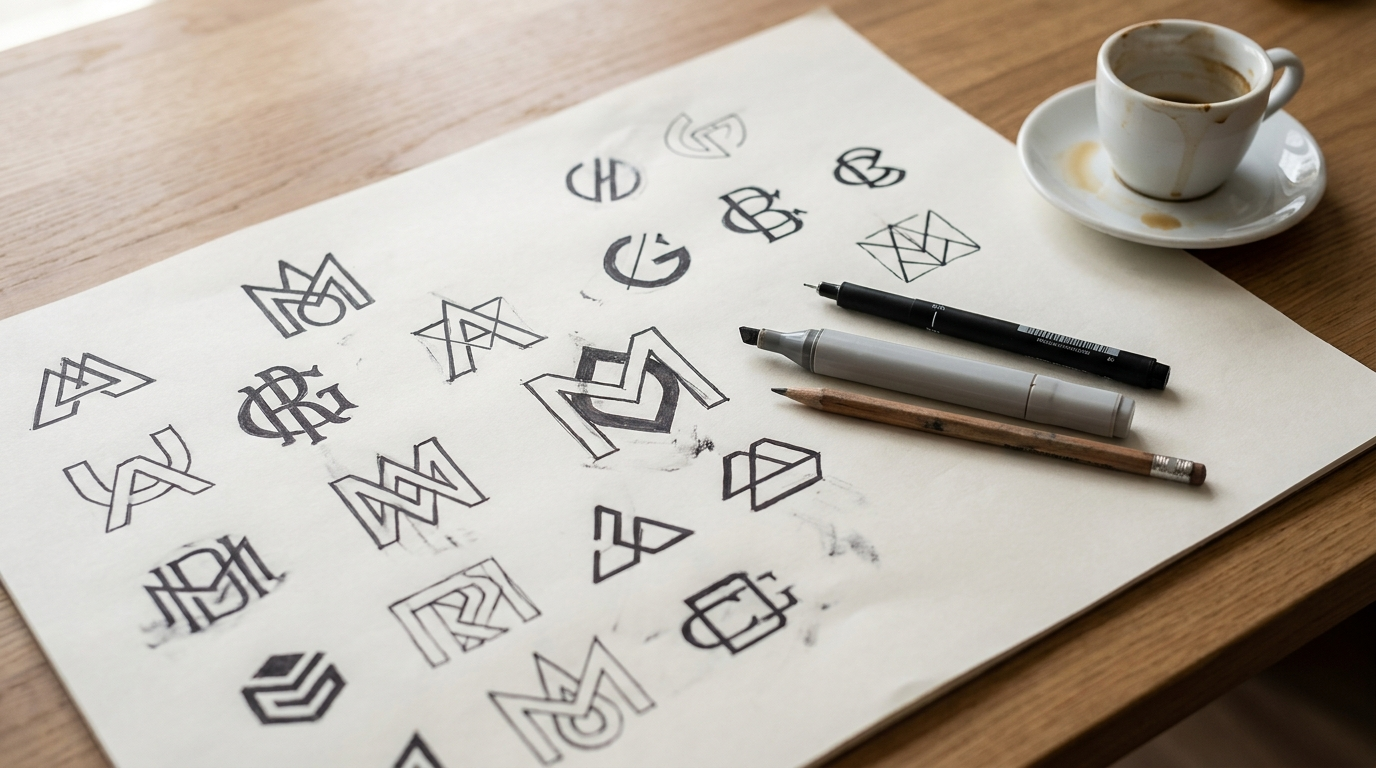
- Trademark: yes. Canadian trademark law asks whether a mark is distinctive and not confusing. It never asks who made it.
- Copyright: probably not. The Government of Canada’s own consultation report states that Canadian jurisprudence suggests authorship must be attributed to a human who exercises skill and judgment. Courts have not ruled on AI specifically yet.
- The actual risk is sameness. CIPO treats a design that is common to the trade as having no inherent distinctiveness. Image models trained on the same corpus and prompted with the same industry cliches converge on the same visuals.
- Canva says so itself. Its own help documentation warns that AI-created works may not be unique to you and may not be suitable for use as a trademark.
- Cost in Canada, 2026: $491.06 CAD in government fees for a single class filed online, with no separate registration fee at the end.
- Timeline: CIPO’s forecast for applications filed in September 2026 is roughly 8.1 months to first examination, with a published service standard of 14 months for a first office action.
Table of contents
- Can you trademark an AI-generated logo in Canada?
- Trademark and copyright are two different questions
- The real obstacle is distinctiveness, not authorship
- Do you actually own the logo the generator produced?
- What Canadian registration costs and how long it takes
- Seven steps to make an AI logo registrable
- Common mistakes
- FAQ
Can you trademark an AI-generated logo in Canada?
Yes, subject to the same tests as any other mark. Section 12 of the Trademarks Act lists what makes a mark unregistrable: it is primarily merely a name or surname, it is clearly descriptive or deceptively misdescriptive, it is the name of the goods or services, it is confusing with a registered trademark, or it falls into a prohibited category. Read the section end to end. There is no clause about who or what created the design.
Section 37(1)(d) lets the Registrar refuse an application if satisfied the mark is not distinctive. Section 32(1)(b) lets the Registrar demand evidence of distinctiveness where the preliminary view is that the mark is not inherently distinctive. Those two provisions are where AI logos get into trouble, and they would apply identically to a human designer who drew a generic coffee cup for a cafe.
So the honest answer to the question people are actually asking is this. Canada will not refuse your logo because a machine made it. Canada may well refuse it because it looks like every other logo in your industry, and that is a much more likely outcome with AI output than with a considered identity build.
What about the CIPO practice notice on AI?
CIPO published a practice notice titled Use of AI in proceedings before the Trademarks Opposition Board on 4 June 2025. It requires a declaration in the first paragraph of any document containing AI-generated content filed in a proceeding under sections 11.13, 38 or 45 of the Act, confirming that the party or their agent has reviewed and verified the AI-generated content and the authorities cited. Failure to declare, or a false declaration, may be treated as unreasonable conduct and lead to a costs award.
Read that scope carefully, because half the pages covering this get it wrong. The notice governs litigation filings before the Opposition Board. It does not require you to declare that your logo was AI-generated when you file a trademark application. There is no such requirement in Canada. The notice also confirms the Board does not currently use AI to render decisions or analyse evidence.
Trademark and copyright are two different questions
Almost every scary headline you have read about AI art and intellectual property is about copyright. None of it is a bar to trademark registration. Keeping the two separate is the single most useful thing in this article.
| Question | Trademark | Copyright |
|---|---|---|
| What it protects | Your right to use a mark to identify your goods or services in commerce | The artistic work itself as a creation |
| Does it require a human creator? | No provision in the Trademarks Act | Canada’s working position is that authorship must be human |
| What kills it | Lack of distinctiveness, confusion with an existing mark | No qualifying human author, or no chain of title |
| Registration in Canada | Examined by CIPO, roughly 8 months to first examination | Issued with no substantive examination, often instantly |
| Cost, single class, online, 2026 | $491.06 CAD in government fees | $50 to $65 CAD, but see the caveat below |
Where Canada actually stands on AI and copyright
The Government of Canada ran a consultation on copyright and generative AI from 12 October 2023 to 15 January 2024, and published the What We Heard Report in 2025. Two findings matter for a business owner:
- The report’s own footnote states that existing Canadian copyright jurisprudence suggests authorship must be attributed to a human who exercises skill and judgment to create a work.
- The report also states plainly that, given the novelty of generative AI, Canadian courts have not yet commented specifically on these questions.
No amendment to the Copyright Act on AI authorship has been enacted since. So the position is unsettled but leaning strongly toward a human authorship requirement.
Why a Canadian copyright registration proves less than you think
This is the part almost nobody tells small business owners. CIPO does not substantively examine copyright applications. In the ongoing Federal Court case CIPPIC v Sahni (file T-1717-24), the clinic is seeking to expunge copyright registration no. 1188619, issued 1 December 2021 for an image called SURYAST, which lists a human applicant and an AI painting app as co-authors. CIPO’s stated position is that it does not verify ownership or the particulars provided on the application form, and that online submissions generate certificates effectively instantaneously. Details are on the CIPPIC case page.
As of this writing no decision has been released and the parties are awaiting a hearing date. Two takeaways. First, a Canadian copyright certificate on an AI image is not evidence that copyright subsists. Second, this is the case to watch, because it will be the first Canadian judicial word on the subject.
The American cases are about copyright too
In Thaler v. Perlmutter, the U.S. Court of Appeals for the D.C. Circuit held on 18 March 2025 that the Copyright Act of 1976 requires eligible work to be authored in the first instance by a human being. The Supreme Court denied certiorari on 2 March 2026. The U.S. Copyright Office reached a compatible conclusion in Part 2 of its Copyright and Artificial Intelligence report, published 29 January 2025: outputs are protectable only where a human author determined sufficient expressive elements.
Note what none of that says. It says nothing about trademarks. Neither the USPTO nor CIPO has ever refused a mark on the ground that AI drew it. Thaler gets cited constantly in blog posts about logos, and it is the wrong statute.
The real obstacle is distinctiveness, not authorship
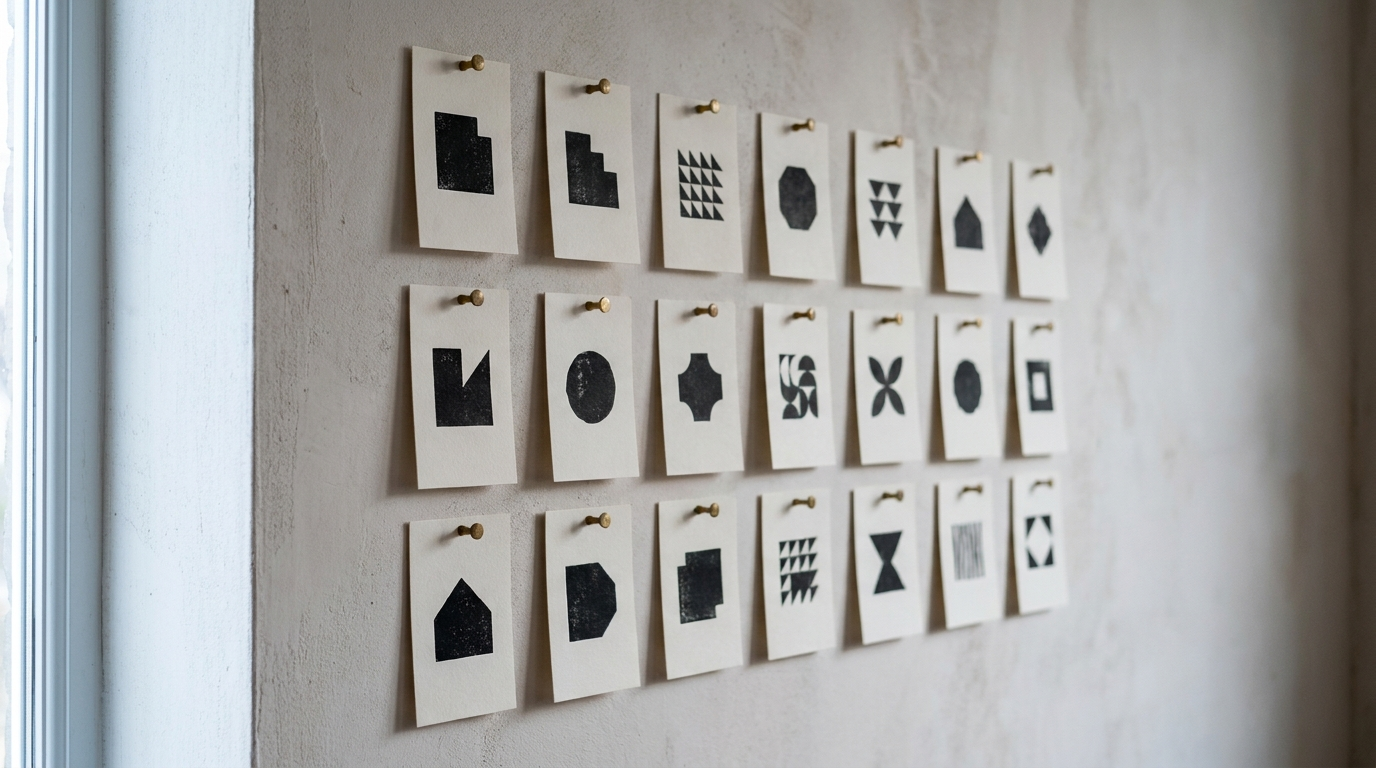
A trademark exists to tell a buyer that these goods come from one particular source. If your mark could just as easily belong to twenty other businesses, it is not doing that job, and CIPO will say so.
CIPO’s examination guidance on paragraph 32(1)(b) is explicit about designs. A trademark that consists of a design common to the trade lacks inherent distinctiveness unless it is depicted in a special or fanciful manner. The examples CIPO gives are exactly the kind of thing an image model produces on the first prompt: grapes and vine leaves for wine, cats or dogs for pet food and veterinary services, lightning flashes for electrical equipment, orchard scenes for fruit. The guidance is published in the Trademarks Examination Manual.
The test an examiner applies is whether other traders should be able, in the ordinary course of their businesses, to use the same trademark for the same goods or services. If your AI logo is a stylised mountain for a Calgary construction firm, or a shield for a security company, or a leaf for a wellness brand, the answer is yes and you have a problem.
Why AI output converges
Diffusion models are trained on the same public corpus of existing design work. Given the same industry prompt they land on the same visual tropes, because that is what the training data rewards. Ask three different tools for a logo for a plumbing company and you will get three variations on a droplet and a wrench. That is not a knock on the tools. It is how they work, and it is precisely the condition CIPO’s guidance describes as a design common to the trade.
Canadian courts have described inherent distinctiveness in similar terms. In ITV Technologies Inc. v. WIC Television Ltd., 2003 FC 1056, the Court noted that a mark composed of a unique or invented name, such that it can only refer to one thing, possesses more inherent distinctiveness than a word commonly used in the trade. Substitute “design” for “name” and you have the AI logo problem in one sentence.
The escape hatch
Section 12(3) of the Act allows a mark that would otherwise be unregistrable under 12(1)(a) or 12(1)(b) to register if it was distinctive at the filing date. Combined with section 32(1)(b), that means a mark lacking inherent distinctiveness can still register on evidence of acquired distinctiveness: proof that consumers have come to know the mark as originating from one particular source.
Practically, that means sales figures, advertising spend, length of use, market surveys and distribution evidence. It is expensive to assemble and it is the slow road. Designing a distinctive mark in the first place is cheaper than proving one became distinctive later.
Do you actually own the logo the generator produced?
Registration is one thing. Enforcement is another. To stop a competitor copying your mark you need a clean chain of title to the artwork. Here is what the major tools actually say, read from their own published terms.
| Tool | What the published terms say | The catch |
|---|---|---|
| Midjourney (ToS effective 27 May 2026) | You own the assets you create, to the fullest extent possible under applicable law | Companies over 1,000,000 USD annual revenue must be on a Pro or Mega plan to own output. You grant Midjourney a perpetual, irrevocable, sublicensable licence that survives termination. Assets are publicly viewable and remixable by default unless you have Stealth mode. Provided as is, with no warranty of title or non-infringement |
| OpenAI, ChatGPT and DALL-E (terms effective 1 January 2026) | You own the output, and OpenAI assigns you its right, title and interest, if any | Note the hedges: “as between you and OpenAI” and “if any”. OpenAI’s own terms warn that output may not be unique and other users may receive similar output |
| Canva | As between you and Canva, you own your AI-created works | Canva’s own help documentation states it cannot guarantee AI-created works are unique to you, and that they may not be suitable to use as a trademark. Separately, Canva states that logos built from its templates and stock content carry only a non-exclusive licence and cannot be registered as a trademark |
| Adobe Firefly | Generative features are governed by Adobe’s generative AI guidelines, last updated 15 May 2026 | Adobe may attach Content Credentials to AI content, and you must not remove, alter or disable them. That makes the file provably AI-generated |
| Looka | Points users to CIPO and explicitly declines to give legal advice on trademarking | Template-derived elements are the same non-exclusivity problem as Canva |
The Canva trademark help page is the most useful document in that table, because it is a major AI design platform telling you in plain language that its own output may not be suitable as a trademark. Elements in a logo need to be exclusive to you. Non-exclusive licences do not clear that bar.
The practical consequence
You can end up in a position where you hold a valid Canadian trademark registration for a mark you cannot assert copyright in. That is not fatal. Trademark rights are the ones that matter for stopping a competitor in your category from trading off your identity. But it does mean you cannot stop an unrelated business in an unrelated industry from using a visually similar image, because you have no copyright to assert and no likelihood of confusion to argue.
What Canadian registration costs and how long it takes

All figures below are government fees in Canadian dollars, taken from the CIPO trademark fee schedule, last modified 31 July 2026. They exclude agent or lawyer fees.
| Fee | 2026 (CAD) | 2027 (CAD) |
|---|---|---|
| Application online, first class of goods or services | $491.06 | $499.41 |
| Application online, each additional class | $149.04 | $151.57 |
| Application by any other means (paper), first class | $640.10 | $650.98 |
| Renewal online, first class | $595.06 | $605.18 |
| Renewal online, each additional class | $185.49 | $188.64 |
| Statement of opposition, section 38(1) | $1,115.08 | $1,134.04 |
| Extension of time, section 47, per act | $150.00 | $150.00 |
Three things worth knowing that most guides omit:
- There is no separate registration fee for applications filed on or after 17 June 2019. What you pay at filing is what you pay.
- Certain trademark fees rise 1.7% on 1 January 2027 under the Service Fees Act. Filing in Q4 2026 saves you a small amount.
- The fee that applies is the one in effect on the date the Registrar receives payment, not the date you requested the service.
How long does it take?
CIPO publishes a forecast on its trademarks landing page and refreshes it monthly. For applications filed in September 2026 the forecast wait for examination is approximately 8.1 months. CIPO’s published performance target for the 2026 to 2027 fiscal year is a first office action within 14 months of the filing date, at a 90% expectation.
After examination the sequence is fixed by the process itself. Approved applications are advertised in the Trademarks Journal roughly two weeks after approval. A two-month opposition window then opens. If nobody opposes, registration follows. If an examiner raises an objection you get six months to respond.
Add it up and a clean, unopposed Canadian trademark realistically takes 12 to 18 months from filing to registration. CIPO does not publish an end-to-end figure, so treat that composite as an estimate built from the published components above. Plan your brand launch accordingly, and do not wait for registration before you start using the mark, because use is what builds the rights.
Seven steps to make an AI logo registrable in Canada
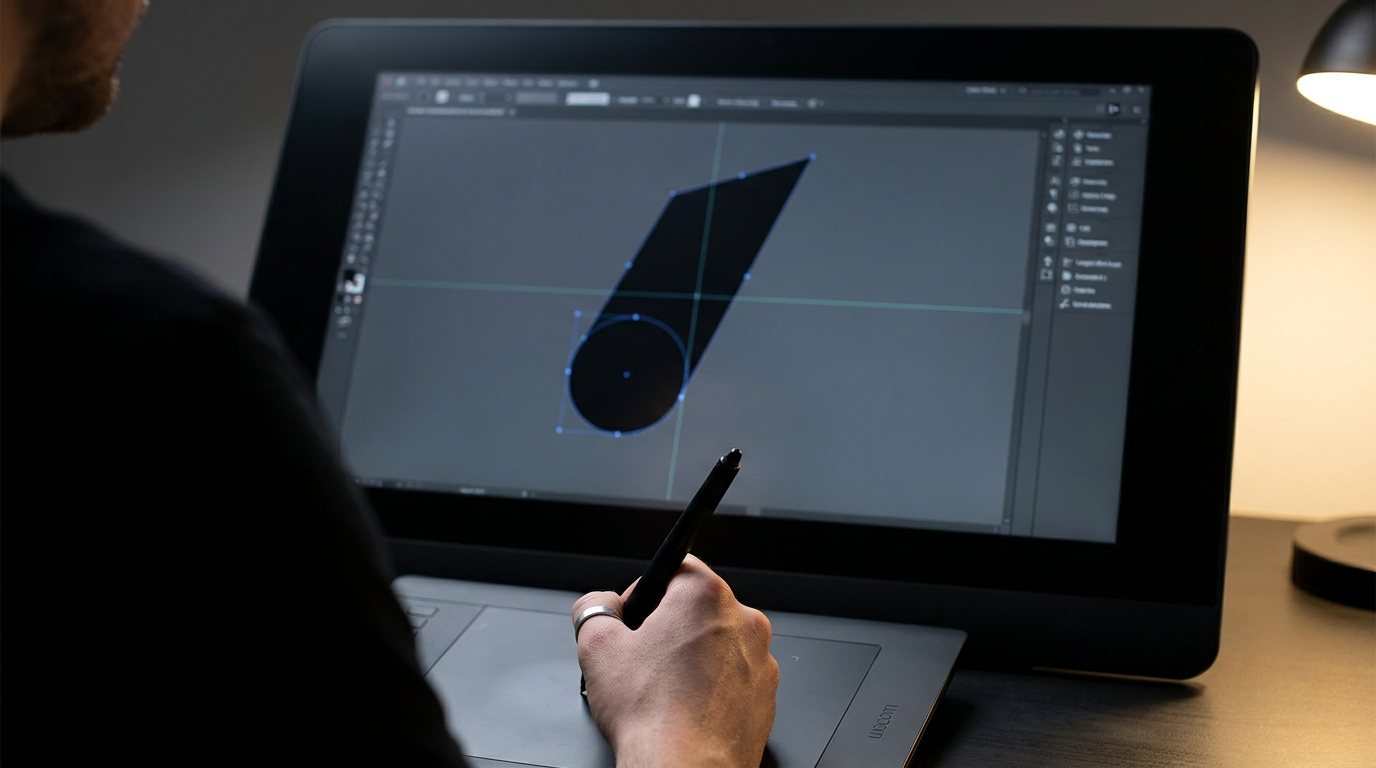
This is the sequence we run when a client arrives with an AI-generated mark they are already attached to. It is designed to fix the distinctiveness and chain-of-title problems before a single dollar goes to CIPO.
- Search before you fall in love. Run the mark through the Canadian Trademarks Database and a reverse image search. If something confusingly similar is already registered in your Nice class, stop. No amount of redrawing fixes a confusion refusal.
- Kill the industry cliche. If your mark contains the obvious object for your sector, replace it. A distinctive mark is one that a competitor has no legitimate need to use.
- Redraw the mark as vector art from scratch. Do not trace or auto-vectorise the raster output. Have a human designer construct the final mark on a grid with defined geometry, optical corrections and a documented construction. This is the step that creates a human-authored work with skill and judgment, which is what the Canadian copyright position turns on.
- Document the process. Keep dated files: the brief, the exploration sheets, the construction grid, the version history. If ownership is ever challenged, that file is your evidence.
- Get a written assignment. If a contractor or freelancer touched the mark, get an assignment of copyright and a waiver of moral rights in writing. Canadian copyright in a commissioned work does not automatically belong to the commissioner.
- Strip template and stock content. Anything sourced from a template library under a non-exclusive licence has to come out. Canva says this itself. Elements in a logo need to be exclusive to you.
- File in the right classes, then use the mark. File online for the goods and services you actually offer. Then use it publicly and consistently, because use is what builds distinctiveness and use is what you will need if you ever have to prove acquired distinctiveness.
Step three is where most of the value sits. An AI generation is a fast, cheap way to explore direction. It is a poor final asset. Treating the output as a mood board rather than a deliverable solves the ownership problem and the distinctiveness problem at the same time, which is exactly how our brand identity work is structured.
Common mistakes
- Assuming a copyright registration certificate settles ownership. CIPO does not examine copyright applications. A certificate is a filing receipt, not a finding.
- Citing Thaler as a reason you cannot trademark an AI logo. Wrong statute, wrong country, wrong question.
- Believing you must disclose AI use on a trademark application. You do not. The June 2025 practice notice applies to Opposition Board proceedings.
- Registering a logo built on template stock content. Non-exclusive licences fail the exclusivity requirement, and the platform itself will tell you so if you read the help docs.
- Filing the raster PNG. Trademark drawings need clean, reproducible artwork. Soft AI edges, fake gradients and stray artefacts create problems that surface later at reproduction.
- Filing in every class “to be safe”. Each additional class is $149.04 CAD in 2026, and unused classes are vulnerable to a section 45 non-use proceeding three years after registration.
- Launching the whole brand before searching. The cheapest moment to change a mark is before the signage, the vehicle wrap and the website are built.
How this changes what a logo project should look like
The arrival of good image models has not made logo design worthless. It has moved the value. Generating a hundred visual directions in an afternoon is now free. What is still scarce, and what determines whether the mark survives examination and is worth defending, is the judgment about which direction is ownable in your category, and the craft to build it as a real asset with a documented construction and a clean chain of title.
That is also why the brand system matters more than the mark. Colour, type, layout and voice carry recognition well beyond a symbol. We wrote about the evidence side of that in how to choose brand colours without relying on colour psychology myths, and the same discipline applies here: decide on mechanics, not on vibes.
Frequently asked questions
Can I trademark an AI-generated logo in Canada?
Yes. The Trademarks Act contains no authorship requirement. Registrability turns on distinctiveness, descriptiveness and confusion with existing marks, none of which depend on who or what created the design. The practical risk is that AI output often resembles a design common to the trade, which CIPO’s examination guidance treats as lacking inherent distinctiveness.
Do I own the copyright in an AI-generated logo in Canada?
Probably not, on the current reading. The Government of Canada’s 2025 consultation report states that Canadian jurisprudence suggests authorship must be attributed to a human who exercises skill and judgment, and that courts have not yet ruled on AI specifically. A human redrawing the mark from scratch with genuine skill and judgment is the standard route to a copyright-protected final asset.
Do I have to tell CIPO that my logo was made with AI?
No. There is no AI disclosure requirement on a Canadian trademark application. CIPO’s 4 June 2025 practice notice requires an AI declaration only in documents filed in proceedings before the Trademarks Opposition Board under sections 11.13, 38 and 45 of the Act.
How much does it cost to trademark a logo in Canada in 2026?
$491.06 CAD in government fees for a single class filed online, plus $149.04 CAD for each additional class. There is no separate registration fee for applications filed on or after 17 June 2019. Agent or lawyer fees are additional and vary. Certain fees increase by 1.7% on 1 January 2027.
How long does a Canadian trademark take?
CIPO forecasts roughly 8.1 months to examination for applications filed in September 2026, and publishes a 14-month service standard for a first office action. Add about two weeks to advertisement in the Trademarks Journal and a two-month opposition window. A clean, unopposed file realistically runs 12 to 18 months end to end.
Can I trademark a logo I made in Canva or Looka?
Not as built. Canva states directly that logos using its templates and stock content carry a non-exclusive licence and cannot be registered as a trademark, because elements in a logo need to be exclusive to you. Looka declines to advise and points users to CIPO. A custom mark, drawn from scratch and owned outright, avoids the problem entirely.
Will an AI logo be refused for lack of distinctiveness?
It can be. CIPO’s examination guidance states that a design common to the trade lacks inherent distinctiveness unless depicted in a special or fanciful manner. Because image models trained on the same corpus converge on the same industry visuals, AI output lands in that category more often than a considered custom design does. Section 12(3) still allows registration on evidence of acquired distinctiveness at the filing date.
Does the American Thaler decision apply in Canada?
No. Thaler v. Perlmutter is a U.S. copyright decision, decided 18 March 2025 with certiorari denied 2 March 2026. It has no bearing on Canadian trademark registration and it is not binding on Canadian courts. The Canadian case to watch is CIPPIC v Sahni, Federal Court file T-1717-24, which is still awaiting a hearing date.
The bottom line
Canada will register an AI-generated logo. Canada will not register a generic one. The question that actually decides whether your mark is an asset or a liability has nothing to do with the tool and everything to do with whether the mark is ownable in your category and whether you can prove you own it.
If you generated a logo, liked it, and now want to know whether it will survive examination and whether it is worth building a business on, that is a solvable problem and it is cheaper to solve now than after the signage goes up.
Tell us about your brand through the Wise Media intake form and we will tell you honestly whether your mark is ownable, what needs to change, and what a proper identity build would cost. If you need the site to match, our website packages and design packages pick up where the mark leaves off.
This article is general information, current as of 8 September 2026. It is not legal advice and does not create a solicitor-client or agent-client relationship. Trademark law is fact specific. Confirm your own position with a registered Canadian trademark agent or an intellectual property lawyer before filing.