
By Cody Wise, Founder, Wise Media. Last updated 21 September 2026.
Summary
A brand identity package normally includes six things: a logo suite, a colour system, a typography system, core graphic elements, usage guidelines, and a set of applied assets such as stationery or social templates. Everything else is an add-on. The two items that most often cost a business money after the invoice is paid are the font licence and the trademark, and neither is usually included.

This guide breaks down what each deliverable actually is, what is usually excluded, what it costs in Canada, and the twelve checks to run at handoff before you sign anything off.
Table of contents
- What is included in a brand identity package
- The logo suite, and what five variations really means
- Colour and typography, including the font licence trap
- What is usually not included
- Trademark: the part no design package covers
- What it costs in Canada
- The 12 point handoff checklist
- Common mistakes
- FAQ
What is included in a brand identity package
Scope varies by studio, but the industry converges on six core deliverables. If a proposal is missing one of these, it is not a full identity, it is a logo project with extras.
| Deliverable | What you actually receive | Why it matters |
|---|---|---|
| Logo suite | Primary mark, secondary or stacked lockup, horizontal lockup, icon or submark, plus one-colour and reversed versions | A single logo file breaks the moment it meets a square avatar, a dark background or an embroidery machine |
| Colour system | Primary and secondary palette with Hex, RGB, CMYK and Pantone values, plus neutrals | Hex only means your printed material will not match your website |
| Typography system | Heading and body typefaces, weights, sizes and a defined hierarchy | Hierarchy is what makes a brand look consistent when someone else builds the next page |
| Graphic elements | Patterns, textures, icon style, photographic or illustration direction | Prevents the brand from collapsing into logo plus white space |
| Usage guidelines | Clear space, minimum size, misuse examples, colour rules, and often tone of voice | This is the document that keeps the brand intact after the designer leaves |
| Applied assets | Stationery, social profile and banner set, basic templates, sometimes a presentation deck | Proof the system survives contact with real formats |
A quick way to test a proposal: ask what a new hire could produce without calling the designer. If the answer is nothing, the package is incomplete regardless of how many logo concepts it lists.
The logo suite, and what five variations really means
Most reputable packages specify a minimum of five logo variations. That is not padding. Each one solves a specific failure case.
- Primary lockup. The full mark with wordmark, used wherever space allows.
- Stacked or vertical lockup. For narrow columns and square placements.
- Horizontal lockup. For headers, email signatures and sponsor rows.
- Icon or submark. Social avatars, favicons, app icons, stamps on packaging.
- One colour and reversed. Single-colour print, embroidery, engraving, dark backgrounds, and anywhere a full colour mark would be illegible.
File formats you should insist on
Vector is the deliverable. Raster is the convenience copy. At minimum you want:
- AI or EPS for print and for any future designer to work from
- SVG for web, because it stays sharp at every size and weighs almost nothing
- PNG with transparency at several sizes for day to day digital use
- PDF for sending to a printer who asks for print-ready artwork
If you only receive PNG and JPG files, you do not own a usable logo. You own pictures of one. Ask for the vector source files in writing, in the contract, before the project starts.
Colour and typography, including the font licence trap
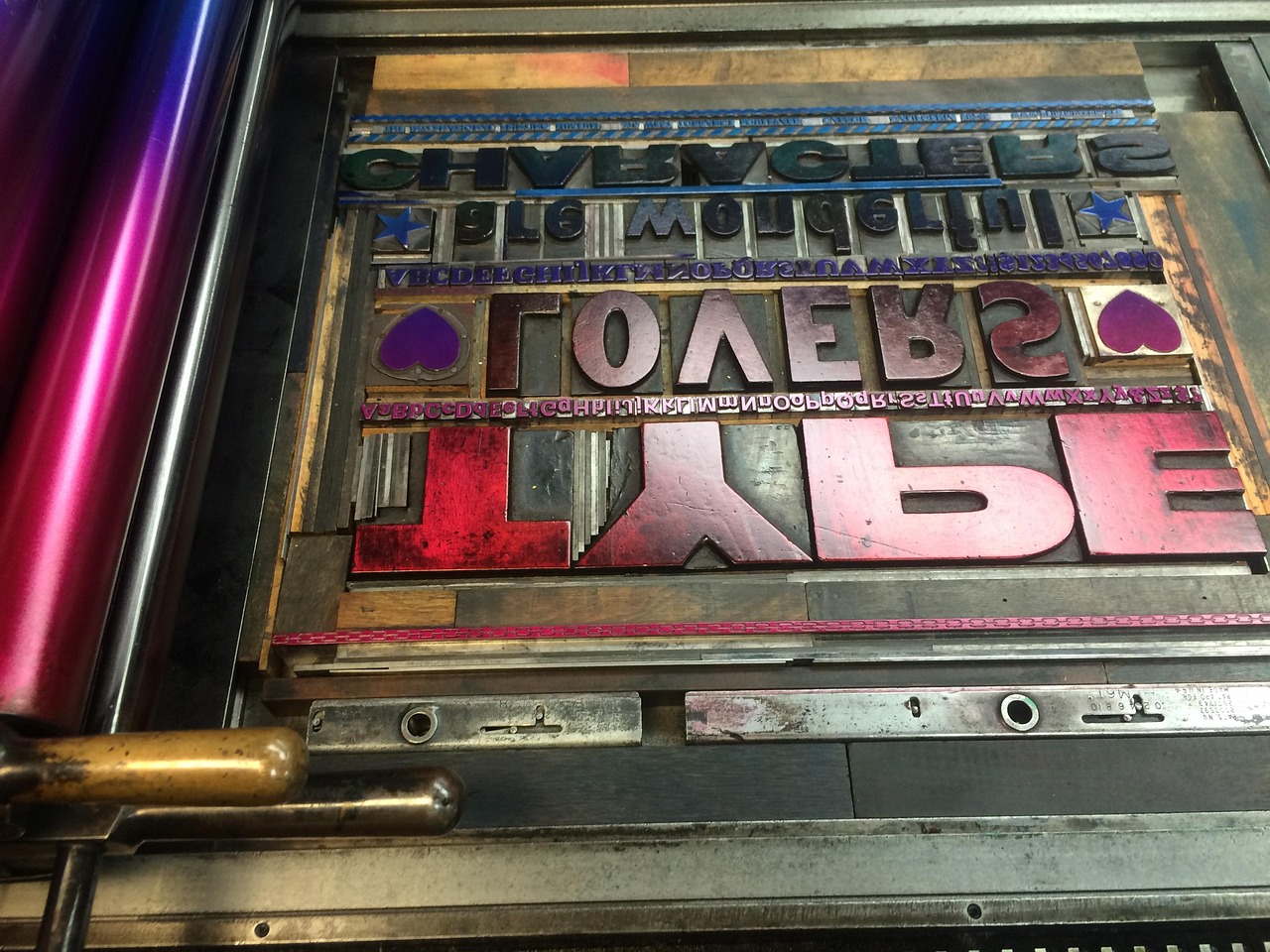
Colour specification, done properly
A colour system is not a row of swatches. Every colour should arrive with four values: Hex for web, RGB for screen, CMYK for process printing, and Pantone for spot colour. The reason is practical. Hex and RGB describe emitted light. CMYK describes ink on paper. A brand blue that looks perfect on a monitor can come back from a printer noticeably duller, and the fix at that point is a reprint.

Also ask for accessible contrast pairings. A palette that fails contrast requirements on your own website is a problem you will meet again, and we covered the compliance side in our Canadian web accessibility guide.
The font licence trap, which almost nobody explains
This is the single most common way a finished brand identity turns into a legal and budget problem months later.
When an agency designs your identity, the font licence usually sits with the agency, not with you. Most font end user licence agreements prohibit transferring or sharing the licence with third parties, including clients. You receive the brand files, you keep using them, and nothing tells you the licence did not travel with the artwork.
Three specific situations to check for:
- Adobe Fonts. Access is tied to a subscriber account and covers desktop and web use under specific terms. If your brand typeface came from Adobe Fonts and you do not have your own Creative Cloud subscription, or the font is not in your plan, you have a problem the day the engagement ends. Adobe publishes the terms in its font licensing FAQ.
- Desktop versus web licences. A desktop licence lets you install the font to produce print and static artwork. Embedding it in a website requires a separate web licence, and web licences are commonly priced by monthly pageviews. Grow past your tier and you owe an upgrade or overage.
- Who the licence names. The licence should name your company, not the designer. Foundries such as Monotype publish guidance on this, and the correct outcome is a perpetual licence held by the business for core brand typefaces.
The clean fix costs almost nothing at the right moment. Ask one question before the project starts: which typefaces are you proposing, what licences do they require, who will hold them, and what is the cost. A studio with a good answer will have it ready. A studio without one has just told you something useful.
Open source families with permissive licences are a legitimate answer to this, not a downgrade. Plenty of serious brands run on them deliberately.
What is usually not included

These commonly sit outside a standard identity package, and each is a real budget line:
| Item | Why it is separate | What to ask |
|---|---|---|
| Brand strategy | Positioning, audience, messaging and naming are research work, not design work | Is strategy included, or are you designing to a brief I supply? |
| Website design and build | A different discipline with its own scope, timeline and hosting decisions | Does the package include a site, or only the assets a site would use? |
| Photography and video | Production cost, talent, location and usage rights | Is art direction included without the shoot itself? |
| Packaging and signage | Requires dielines, substrate specs and vendor coordination | Who is producing the technical files for the vendor? |
| Print production | Design of a business card is not the printing of it | Is print management included or am I taking files to a printer? |
| Font licences | Held by whoever buys them, often the agency | Who holds the licence, and what will it cost me annually? |
| Trademark registration | A legal filing, not a design deliverable | Is any clearance search done before we commit to this name? |
None of these are red flags on their own. The red flag is a proposal that does not say either way, because ambiguity at proposal stage reliably becomes a change order later. If you want the full cost picture for a Canadian project, our branding cost guide and our rebrand timeline guide cover the money and the calendar respectively.
Trademark: the part no design package covers
A brand identity package gives you a logo. It does not give you the right to stop somebody else from using something confusingly similar. That right comes from registration, and in Canada that means the Canadian Intellectual Property Office.
Published CIPO fees, in Canadian dollars, from the official fee schedule:
| Fee | 2026 (CAD) | 2027 (CAD) |
|---|---|---|
| Application, first class of goods or services, filed online | $491.06 | $499.41 |
| Application, each additional class | $149.04 | $151.57 |
| Application, first class, filed by any other means | $640.10 | $650.98 |
| Renewal, first class, online | $595.06 | $605.18 |
| Renewal, each additional class | $185.49 | $188.64 |
| Filing a statement of opposition | $1,115.08 | $1,134.04 |
Note the mechanics, because they catch people. Certain trademark fees increase by 1.7 percent on 1 January 2027 under the Service Fees Act, and the amount you owe depends on the date the Registrar receives payment, not the date you started the application. If your payment lands on or after 1 January, you pay the new amount, including for additional classes even when the first class was already paid. Verify current amounts on the CIPO page before you file, since these figures are adjusted annually.
How long it takes
Budget 12 to 18 months from filing to registration where nothing is contested, and up to two years or more where an examiner raises objections or a third party opposes. Reported 2026 data puts first examination at roughly eight months for recent filings, with a median of about 23 months to registration for marks that issued in the first half of 2026. Those are secondary reports of CIPO performance data rather than figures we pulled from the register ourselves, so treat them as a planning range and confirm with counsel.
The practical implication for a brand project: start clearance before you fall in love with a name, not after the logo is finished. And if the mark was generated with AI tooling, there is a separate ownership question we covered in can I trademark an AI-generated logo in Canada.
None of this is legal advice. Trademark filings have real consequences and a registered trademark agent or lawyer is worth the fee.
What it costs in Canada
Published market ranges for full agency brand identity work run roughly from five thousand to six figures depending on scope, with most published ranges quoted in US dollars by US-based sources. Treat any range you find online as a published rate to verify, not a quote, and always confirm the currency before comparing.
For transparency, Wise Media publishes fixed-scope branding package pricing on our own branding packages page, starting at $500 USD for a basic identity and $2,500 USD for the full system with an extended guidelines document, pitch deck and animated logo. Pricing shown on that page is in US dollars. What changes the number on any quote, ours or anyone else, is scope: number of lockups, depth of the guidelines document, how many applied assets, and whether strategy is inside or outside the engagement.
Three cost drivers worth understanding before you compare quotes:
- Guideline depth. A four page mini guide and a forty page brand book are different products. Ask for the page count or section list.
- Applied assets. Every additional template, format and size is production time. Ten social templates is a different job from two.
- Revision structure. Unlimited revisions is rarely real. A defined number of rounds with a clear scope for each is better for both sides.
The 12 point handoff checklist

Run this before you sign off on a brand identity project. It takes twenty minutes and it is the difference between owning a brand and renting one.
- Vector source files received in AI or EPS, not just exports.
- SVG, PNG with transparency and print-ready PDF for every lockup.
- All five or more logo variations, including one colour and reversed.
- Colour values supplied in Hex, RGB, CMYK and Pantone.
- Contrast pairings documented for accessible text on brand colours.
- Typefaces named, with licence type, licence holder and annual cost stated in writing.
- Web font licence tier confirmed against your actual traffic.
- Guidelines document covering clear space, minimum size and misuse examples.
- Written confirmation of who owns the artwork and what rights transfer on final payment.
- Editable source files for stationery and templates, not flattened images.
- A named file structure you can hand to the next designer without explanation.
- A trademark clearance conversation started, even if you are not filing yet.
Common mistakes
- Buying a logo and calling it a brand. A logo without a colour system, a type system and rules is one asset, not an identity.
- Accepting raster files only. No vector means no scaling, no print, and a rebuild the next time anything changes.
- Never asking about the font licence. The most expensive question nobody asks at proposal stage.
- Skipping CMYK and Pantone. The cost surfaces at the printer, and by then the run is paid for.
- Treating trademark as a later problem. Clearance is cheap before launch and expensive after.
- Comparing quotes across currencies. A USD quote and a CAD quote are not the same number. Convert before you compare.
- No written ownership clause. Assume nothing transfers unless the contract says it does.
Frequently asked questions
What is included in a brand identity package?
A logo suite with multiple lockups, a colour system with Hex, RGB, CMYK and Pantone values, a typography system with defined hierarchy, core graphic elements, usage guidelines, and a set of applied assets such as stationery or social templates. Strategy, websites, photography, font licences and trademark filings are normally separate.
How many logo files should I receive?
At least five variations, each in vector plus raster exports. That means primary, stacked, horizontal, icon, and one-colour or reversed, supplied as AI or EPS, SVG, transparent PNG and print-ready PDF.
Do I own the fonts used in my brand?
Usually not. Font licences commonly sit with the agency and most end user licence agreements prohibit transferring them to a client. You generally need to buy your own licence in your company name, and web use often requires a separate licence priced by pageviews. Ask before the project starts.
Is trademark registration included in a branding package?
No. It is a legal filing with the Canadian Intellectual Property Office, not a design deliverable. Published CIPO fees for 2026 are $491.06 CAD for the first class filed online plus $149.04 CAD for each additional class, with an adjustment scheduled for 1 January 2027. Timelines typically run 12 to 18 months and longer if contested.
What is the difference between brand identity and brand strategy?
Strategy decides what the brand means, who it is for and how it speaks. Identity is the visual system that expresses it. You can buy identity without strategy, and plenty of businesses do, but the designer is then working to whatever brief you supply.
How long does a brand identity project take?
A fixed-scope identity commonly runs a few weeks. A full rebrand across an existing business, with rollout across every touchpoint, runs considerably longer, and we broke the realistic calendar down separately in our rebrand timeline guide.
Do I need a brand style guide if I am a one person business?
Yes, and it matters more, not less. The guide is what lets a freelancer, a printer or a future employee produce something that matches without asking you. We covered what belongs in one in our brand style guide article.
What to do next
If you are comparing proposals right now, take the six deliverables above, put them in a column, and ask each studio to confirm in writing which they include. Then ask the font licence question. Those two moves will separate the serious quotes from the ones that are going to cost more than they say.
Wise Media builds complete brand identity systems for Canadian businesses, with fixed scope, published pricing and vector source files that belong to you. See our branding packages, or our design packages if you need ongoing production once the system exists.
Start with the intake form and we will scope the identity against what you are actually going to produce with it.